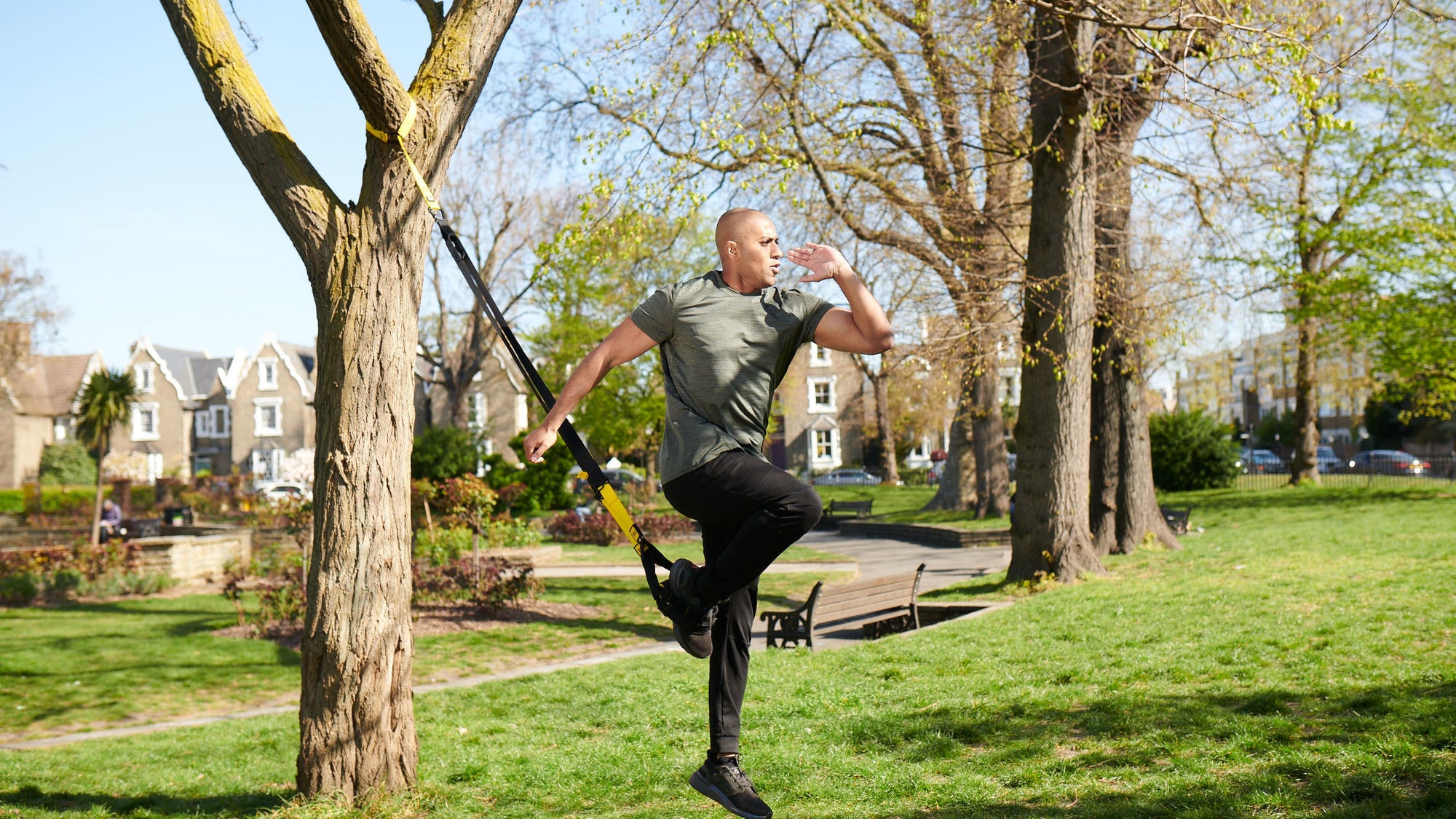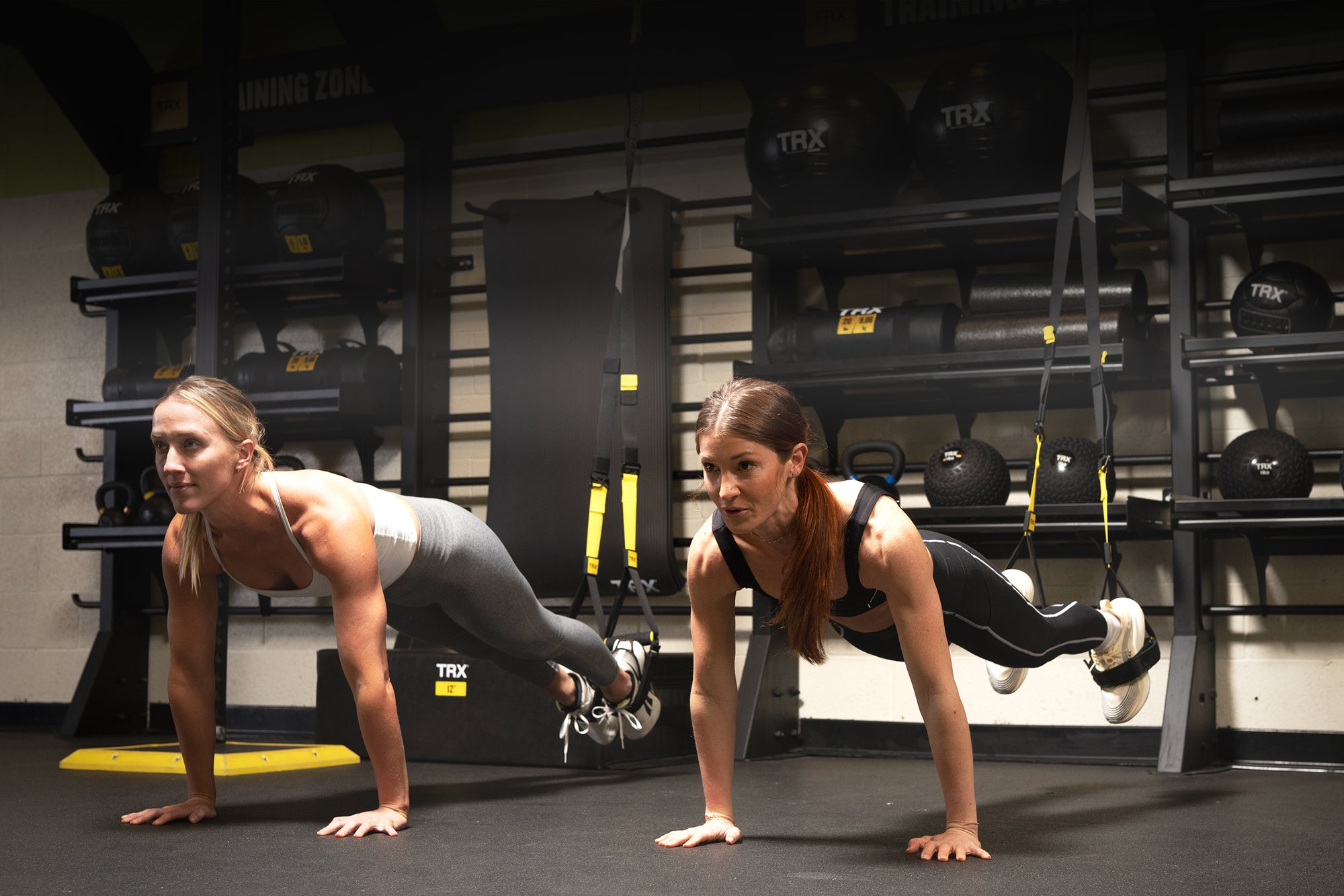

Cable chest exercises let you train the pecs through several angles with a load you can adjust in seconds. Unlike barbells or dumbbells, cables keep pulling in the direction of the pulley throughout each rep. Use the 11 movements below to build strength, control, and a more complete chest routine.
Key Takeaways: Cable Chest Exercises
-
Cable chest exercises train the pecs through presses, flys, and crossovers, and adjustable pulley heights let you change the line of pull without changing the exercise count.
-
Build a balanced session with one press, one fly angle, and one unilateral movement, then match load and weekly volume to your goal and recovery.
-
Control the return, keep elbows soft, and reduce the load if you must swing or twist. Pain or an existing injury calls for guidance from a qualified healthcare professional.
-
TRX Training’s 1.5-pound HOME2 kit includes door and suspension anchors for bodyweight chest presses, and changing body angle adjusts the resistance when a cable station is unavailable.
Quick Answer: What Is a Cable Chest Pull?
A chest pull with cables usually refers to a cable fly, crossover, high-to-low fly, or low-to-high fly. These movements bring your arms across or toward the front of your body to work the pecs. Back-focused pull exercises, such as rows and pulldowns, use a different movement pattern.
Searches for cable pull-downs for chest usually point to high-to-low flys. Cable pull-ups for chest often describe low-to-high flys.
In pull chest workouts, match the pulley height to your direction of movement and keep each rep controlled. This setup trains your chest with cables without turning the exercise into a shoulder-dominant swing.
Cable Chest Press or TRX Chest Press? Choose by Training Goal
Use a cable chest press for a selected external load, and use a TRX chest press for bodyweight resistance that changes with your stance and body angle.
The cable version works well for stack-based progression and repeatable loading. The TRX Suspension Trainer™ fits days when you need a standing press that keeps your core active without a cable station.
To make the TRX chest press more manageable, stand more upright or widen your stance. Move your feet closer to the anchor as your control improves and you want more resistance.
Compare the 11 Cable Chest Exercises
Use this comparison to match each movement to your experience level, setup, and training goal.
|
Exercise |
Chest Emphasis |
Level |
Setup |
Best Use |
|
Cable Crossover |
Midline fly path |
Intermediate |
Dual high pulleys |
Bilateral fly |
|
Seated Cable Chest Press |
Mid chest |
Beginner |
Bench, mid pulleys |
Supported pressing |
|
Standing Cable Chest Press |
Mid chest and core |
Intermediate |
Dual shoulder-height pulleys |
Pressing without a bench |
|
Flat Cable Flys |
Mid chest |
Intermediate |
Flat bench, low pulleys |
Controlled stretch and adduction |
|
Cable Incline Press |
Upper chest |
Beginner to intermediate |
Incline bench, low pulleys |
Angled pressing |
|
Single Arm Seated Cable Press |
Mid chest |
Beginner to intermediate |
Bench, one mid pulley |
Side-to-side control |
|
Unilateral Cable Press |
Mid chest and core |
Intermediate |
Standing, shoulder-height pulley |
Anti-rotation pressing |
|
One Arm Cable Crossover |
Single-side fly |
Intermediate |
One high pulley |
Single-side adduction |
|
Cable Bench Press |
Mid chest |
Beginner |
Flat bench, low pulleys |
Familiar press pattern |
|
High-to-Low Cable Flys |
Downward fly |
Intermediate |
Dual high pulleys |
Downward fly angle |
|
Low-to-High Cable Flys |
Upward fly |
Intermediate |
Dual low pulleys |
Upward fly angle |
Muscles Worked by Cable Chest Exercises
Your pectoralis major is the main chest muscle used in cable presses, flys, and crossovers. Pressing variations recruit the front shoulders and triceps. The serratus anterior helps the shoulder blades move around the ribcage as the arms reach forward.
Standing and single-arm variations make your core stabilize the torso and resist rotation. Flys reduce the role of the triceps because the elbow angle stays mostly fixed, which puts more of the movement at the shoulder.
Think about each muscle’s job. The pectoralis major brings your upper arm forward and toward the midline.
The anterior deltoid helps lift and press the arm. The triceps straightens the elbow during presses, and the serratus anterior supports smooth shoulder-blade movement as your arms reach forward.
The balance changes with the exercise. Bench-supported presses reduce the stability demand so you can focus on the pressing path. Standing and single-arm movements ask your abs, obliques, and glutes to keep your ribs and pelvis stacked.
Flys keep the elbow angle more consistent, which reduces the triceps’ role. Cable angles can shift the focus, but no angle completely isolates one region of the chest. Choose the variation that lets you feel the pecs working without losing control or position.
Why Should You Do Cable Chest Exercises?
Cable chest exercises complement barbell and dumbbell presses by giving you more control over load, angle, and body position. Key benefits include the following.
-
Shoulder control and mobility: Cable exercises ask smaller stabilizing muscles around the shoulder to help control the path. Use a load that lets you move smoothly through a comfortable range.
-
Easy-to-adjust load and angle: Pins and pulley heights make cable work simple to scale. This lets you match the movement to your current ability, but pain or injury calls for guidance from a qualified healthcare professional. See how cables compare with bench pressing or chest pressing before choosing your main lift.
-
Core and upper-body balance: Standing presses and flys make your core resist extension and rotation. Pair chest work with pull exercises for a balanced upper-body program. For a full-body option, try this superset with the TRX Atomic Push-up and a kettlebell swing.
-
Targeted pec work: Flys and crossovers can help you isolate the chest muscles by limiting elbow extension and keeping the movement focused at the shoulder. An American Council on Exercise study found that bent-forward cable crossovers produced 93% of the barbell bench press’s pectoralis major activation in a study of 114 men with prior resistance-training experience That makes crossovers a useful option, not a promise of superior growth.
-
Side-to-side training: Unilateral cable work can expose and train differences in strength or control between sides. Focus on steady, repeatable movement instead of expecting one exercise to eliminate every difference.
-
Consistent external tension: Cables can maintain resistance through more of the range than some free-weight movements, depending on the setup. That can increase the time your pecs spend working, but muscle growth still depends on progression, weekly volume, effort, technique, and recovery.
The Best Cable Chest Exercises to Try Today
The 11 movements below cover presses, flys, crossovers, supported setups, and standing variations. Choose exercises that match your training level, and keep every rep controlled.
Want a plan built around your goals? Our quick assessment quiz can help you choose a starting point.
TAKE OUR TRAINING QUIZ
11. Cable Crossover
Cable crossovers train the pecs through horizontal adduction, bringing the upper arms toward the midline. The dual-cable setup keeps resistance on the chest as you move and rewards a slow, controlled return.
Equipment and setup. Set two adjustable pulleys high, attach D-handles, and stand centered in a split stance.
Coach’s cue. Keep a soft elbow bend and pull down and across without swinging your torso.
How to do
-
Stand in the center of the machine with your feet shoulder-width apart, and hold one handle in each hand.
-
Hinge forward slightly with a neutral spine. Keep a soft bend in your elbows and point your palms toward the floor.
-
Brace your core, then pull both handles down and across your body until your hands meet near the midline.
-
Open your arms slowly and return the handles to the starting position.
10. Seated Cable Chest Press
The seated cable chest press gives you back support and a familiar pressing path, making the setup easier for beginners. Adjust the handles to mid-chest height and use a load you can control without shrugging or arching.
Equipment and setup. Supported bench with dual pulleys set around mid-chest height and D-handles.
Coach’s cue. Keep your shoulder blades against the pad and finish each press with soft elbows.
How to do
-
Sit with your back firmly supported against the bench.
-
Set the handles at mid-chest height, plant your feet on the floor, and hold one handle in each hand.
-
Brace your core and press the handles forward until your arms are long without locking your elbows. Keep your back and shoulder blades against the bench.
-
Pause, then bend your elbows and return the handles slowly to the starting position.
9. Standing Cable Chest Press
The standing cable chest press adds a core-stability demand because your torso must resist extension and rotation. It trains the pecs, front shoulders, and triceps while you maintain a stacked ribcage and pelvis. For a suspension-based alternative, try the TRX chest press.
Equipment and setup. Set two pulleys at shoulder height, attach D-handles, and face away in a split stance.
Coach’s cue. Keep your ribs stacked over your pelvis and press without leaning into the cables.
How to do
-
Set the handles at shoulder height, face away from the machine, and hold one handle in each hand with your palms down.
-
Step forward into a split stance with your feet slightly wider than shoulder-width apart.
-
Brace your core and press the handles forward until your arms are long without locking your elbows. Bring your hands together and keep the cables above your shoulders.
-
Pause, then bend your elbows and return the handles slowly toward your shoulders.
8. Flat Cable Flys
Flat cable flys train the chest through a wide arc while the cables provide external tension across the movement. Use a light-to-moderate load and control the stretch instead of chasing range you cannot own. Combine this with ‘Combo #2’ in this TRX Workout for a suspension-based alternative.
Equipment and setup. Flat bench centered between two low pulleys with D-handles.
Coach’s cue. Keep the elbow bend fixed and stop the stretch before your shoulders roll forward.
How to do
-
Center a flat bench between two low pulleys so your chest lines up with the handles when you lie down.
-
Hold each handle with your palms up, lie on the bench, and plant your feet on the floor.
-
Open your arms until they are nearly parallel to the floor, keeping a soft bend in your elbows. Sweep the handles together in a semicircle until your hands meet above your chest.
-
Pause and contract your pecs, then open your arms slowly to return to the starting position.
7. Cable Incline Press
The cable incline press changes the line of pull to target the upper chest and shoulders while the triceps assist. The bench supports your torso, but the load still needs to match a range you can control.
Equipment and setup. Incline bench at about 45 degrees between two low pulleys with D-handles.
Coach’s cue. Press up and inward while keeping your ribs down and shoulders supported by the bench.
How to do
-
Set an incline bench to about 45 degrees between two low pulleys. Position it so the cables line up with your chest when you hold the handles.
-
Hold each handle with your palms up, lie back, and plant your feet on the floor. Position the handles beside your chest with your elbows bent about 90 degrees.
-
Press the handles up and inward until your hands meet above your upper chest.
-
Contract your chest, then inhale as you lower the handles slowly to the starting position.
6. Single Arm Seated Cable Press
The single-arm seated cable press lets you train one side at a time, which can expose and train side-to-side differences in strength or control. The bench supports your torso while your core resists rotation.
Equipment and setup. Bench with one pulley set around mid-chest height and a D-handle.
Coach’s cue. Keep both shoulders against the bench and press without twisting toward the working side.
How to do
-
Sit on a bench with one pulley set at mid-chest height.
-
Hold the handle in one hand and bring it beside your chest.
-
Press the handle forward until your arm is almost straight, keeping a soft elbow and your fist facing forward.
-
Pause and contract your pec, then return slowly to the starting position.
5. Unilateral Cable Press
The unilateral cable press uses a standing split stance and one working arm. Your core resists rotation while the pecs, front shoulder, and triceps drive the press, making it useful for building single-side control.
Equipment and setup. Set one or two pulleys at shoulder height, attach D-handles, and face away in a split stance.
Coach’s cue. Brace first, then press one arm without letting your ribs flare or torso rotate.
How to do
-
Use the setup from “9. Standing Cable Chest Press.”
-
Press one handle forward while keeping the other beside your body.
-
Return the first handle to the start, then press the other arm. Keep your core braced throughout.
4. One Arm Cable Crossover
The one-arm cable crossover trains one pec at a time while your core resists rotation. Keep your torso square and bring the working arm toward your midline without twisting for extra range.
Equipment and setup. Set one pulley high, attach a D-handle, and stand side-on in a stable stance.
Coach’s cue. Keep your torso square and move the arm across your body without rotating for extra range.
How to do
-
Use the setup from “11. Cable Crossover,” but work with one side of the machine.
-
Pull the handle down and across until your hand reaches your midline and you feel your pec contract.
-
Pause, then bend your elbow and return the handle to chest or shoulder height.
3. Cable Bench Press
The cable bench press uses a familiar pressing pattern, so it is a practical starting point for beginners who already know the dumbbell bench press. The bench supports your torso while the cables keep tension on the pecs through the press.
Equipment and setup. Flat bench centered between two low pulleys with D-handles.
Coach’s cue. Keep your shoulder blades supported and finish with soft elbows instead of locking out.
How to do
-
Center a flat bench between two low pulleys so your chest lines up with the handles when you lie down.
-
Hold each handle with your palms forward, lie on the bench, and plant your feet on the floor. Position the handles beside your chest.
-
Press both handles above your torso, bringing your hands together to contract your pecs.
-
Pause, then bend your elbows and return the handles to the sides of your chest.
2. High-to-Low Cable Flys
High-to-low cable flys start with the pulleys above shoulder height and finish with the hands moving toward the lower chest or waist. This downward path changes the line of pull and lets you train the pecs from another angle. The front shoulders assist..Equipment and setup. Set two adjustable pulleys high, attach D-handles, and stand centered in a split stance.
Coach’s cue. Pull down toward the lower chest or waist while keeping your shoulders away from your ears.
How to do
-
Set both pulleys high, choose your load, hold the handles with a neutral grip, and step forward into a split stance.
-
Step forward until the cables are taut. Open your arms near shoulder height with a soft bend in your elbows.
-
Move only at the shoulder joint and bring your arms down and forward toward waist height.
-
Contract your pecs at the bottom, then open your arms to return to the starting position at shoulder height.
1. Low-to-High Cable Flys
Low-to-high cable flys start from low pulleys and sweep the hands upward toward the upper chest. The rising path changes the line of pull while your core keeps your torso from leaning back.
quipment and setup. Dual adjustable pulleys set low with D-handles. stand centered in a split stance.
Coach’s cue. Sweep up toward the upper chest without leaning back or straightening the elbows.
How to do
-
Set both pulleys low, choose your load, hold the handles with your palms slightly up, and step forward into a split stance.
-
Start with a soft bend in your elbows and your arms about 45 degrees from your torso. Move only at the shoulder joint as you lift the handles forward and up. Keep a neutral spine, and bring the handles together near upper-chest height.
-
Pause and contract your pecs, then open your arms slowly to return to the starting position.
How Do You Train Your Chest Without a Cable Machine?
You can train a chest-press pattern without a cable machine by using a TRX Suspension Trainer™ and changing your body angle.
Face away from a secure anchor, hold one handle in each hand, and keep a straight line from head to heels as you bend and extend your elbows.
The setup gives you a practical pressing option at home, outdoors, or on the road. Keep the straps taut and adjust your stance before you add harder variations.
Common Cable Chest Exercise Mistakes
The most common cable chest mistakes are using momentum, locking the elbows, choosing the wrong pulley height, rushing the return, loading too soon, and losing a stacked torso.
-
Uing momentum: If your torso rocks or the handles rush through the middle, reduce the load and let your pecs move the cables.
-
Locking your elbows: Finish presses with long arms and soft elbows. Keep a slight, consistent bend during flys.
-
Choosing the wrong pulley height: Set the pulleys high for high-to-low flys, low for low-to-high flys, and around shoulder or mid-chest height for presses.
-
Rushing the return: Control the eccentric, or lowering phase, instead of letting the weight stack pull your arms back.
-
Loading before you have control: Add weight only after you can repeat the same path without shrugging, twisting, or shortening the range.
-
Losing a stacked torso: Keep your ribs over your pelvis and brace your core. Excess arching or rotation shifts work away from the intended pattern.
Build out your setup with strength training equipment that matches your space and goals, or try one of our TRX products for your workout today.
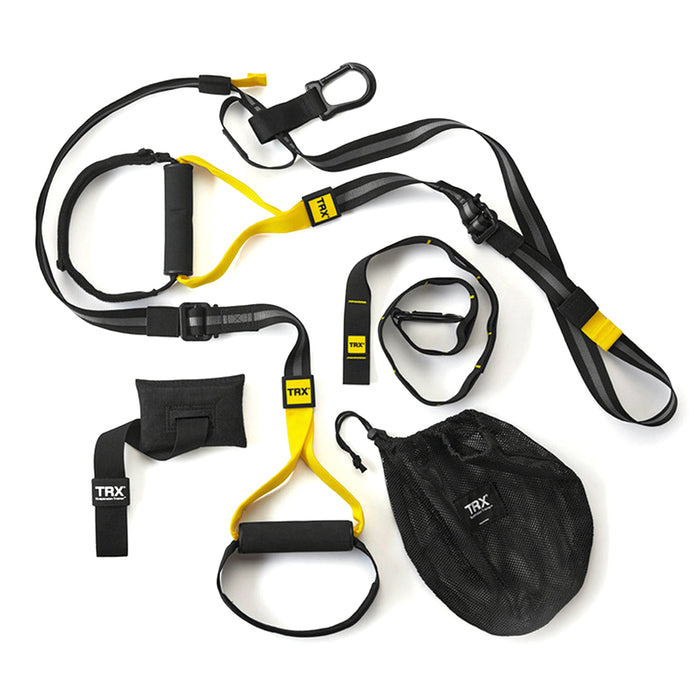
Try one of our TRX products for your workout today:
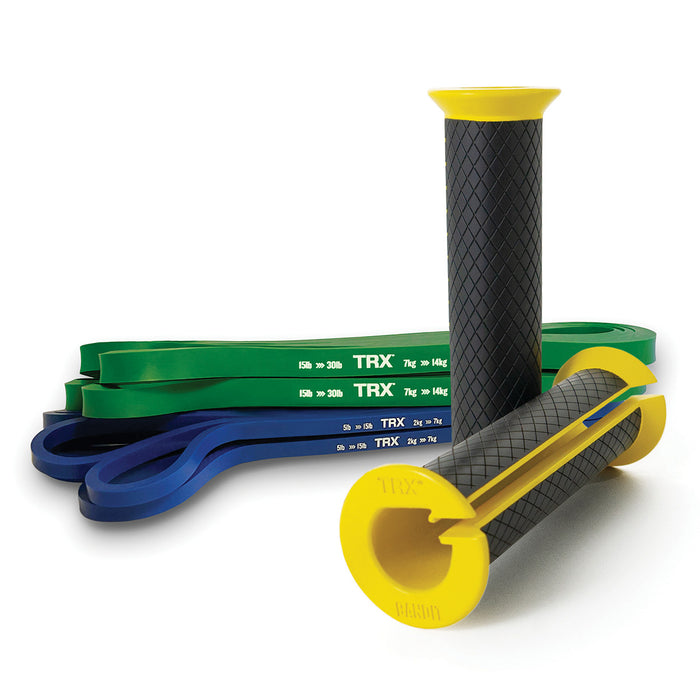
Try These Cable Chest Workouts
Use the 11 exercises above to build a cable chest workout that matches your experience and recovery. A complete session can include one press, one or two fly angles, and one unilateral movement.
As a starting point, use 2 to 4 sets per exercise, 6 to 12 reps for presses, and 10 to 15 reps for flys. Rest 60 to 120 seconds, and finish with one to three clean reps in reserve.
The beginner workout builds control with supported movements. The intermediate workout adds standing work and two fly angles.
The advanced workout combines bilateral and unilateral exercises. Keep the prescribed order and choose loads that let every rep look intentional.
Beginner Cable Chest Workout
This beginner workout uses familiar bench-press and fly patterns. Build control with these cable chest exercises before moving to standing or unilateral variations.
-
A1: Cable Bench Press, 8-10 reps
-
A2: Flat Cable Flys, 12-15 reps
-
Perform these two exercises back to back as a superset for three sets.
-
Use a heavier load for A1 and a lighter load for A2. Keep each load consistent across all three sets.
-
Rest 60-90 seconds between sets.
Coach’s tip.
Once your reps are consistent, try a controlled 3-second eccentric, or lowering phase. A 2021 review found that a slower eccentric can work well with a faster concentric action, but no single tempo is automatically best for hypertrophy. Adjust the load so every rep stays smooth.
Intermediate Cable Chest Workout
The intermediate workout removes bench support to increase the core-stability demand. It introduces high-to-low and low-to-high flys so you can practice two cable angles.
-
A1: Standing Cable Chest Press, 12-10-8-6 reps
-
Perform four sets with the descending rep pattern above. Increase the load only when your form stays consistent.
-
Rest 60-90 seconds between sets.
-
B1: High-to-Low Cable Flys, 10 reps
-
B2: Low-to-High Cable Flys, 10 reps
-
Perform these two exercises back to back as a superset for three sets of 10 reps each.
-
Ret 60 seconds between sets.
Coach’s tip.
Compare the high-to-low and low-to-high flys as a control check, not a contest. If one angle feels weaker, lower the load and build clean reps there before adding weight.
Advanced Cable Chest Workout
Once you’ve progressed through the beginner and intermediate stages, increase the coordination demand by combining bilateral and unilateral work. Keep the load controlled, use the largest comfortable range you can own, and stop each set while your technique is still consistent.
-
A1: Cable Crossover, 10 reps
-
A2: Unilateral Cable Press, 1-3 RIR
-
A3: Single-Arm Crossover, 1-3 RIR
-
Perform all three exercises back to back as a tri-set.
-
Start with the bilateral cable crossover in A1, then move to the unilateral exercises in A2 and A3.
Coach’s tip.
Finish A2 and A3 with one to three clean repetitions in reserve.
A 2023 systematic review found no evidence that momentary muscular failure was superior to non-failure training for hypertrophy. You do not need to grind through sloppy reps.

How to Progress Your Cable Chest Workouts
Use reps, load, effort, and execution together. Current ACSM guidance recommends matching load and volume to the goal instead of following one rigid formula. For these cable workouts, use the listed rep ranges and rest long enough to keep every repetition controlled.
Aimto finish most working sets with one to three clean repetitions in reserve. A 2024 meta-regression found that muscle growth tended to improve as sets ended closer to failure, but the exact relationship remains unclear. Technique still sets the limit.
Once you complete every prescribed rep cleanly at the target effort, add the smallest available load or one to two reps. Change one variable at a time so you can tell what is driving progress.
Frequently Asked Questions About Cable Chest Exercises
These answers cover exercise choice, training frequency, and cable angles for a practical chest routine.
Can cables build your chest?
Yes. Cable presses, flys, and crossovers can train the pecs through several angles while keeping the load easy to adjust. Growth still depends on progressive overload, enough weekly volume, consistent effort, and recovery.
Which cable chest exercise is best for beginners?
Start with the seated cable chest press or cable bench press. Both give your torso more support and use a familiar pressing pattern, which makes it easier to learn the setup and control the return.
Are standing or seated cable exercises better?
Neither is automatically better. Seated and bench-supported variations reduce the balance demand.
Standing variations ask your core to resist extension and rotation. Use the version that matches your goal and lets you keep clean form.
How often should you train your chest with cables?
Train the chest with cables about twice per week when your total volume and recovery allow. Current ACSM guidance recommends training all major muscle groups at least twice weekly, but your schedule should still reflect experience, performance, and recovery.
Should you use high-to-low or low-to-high cable flys?
Use both when they fit your program. High-to-low flys move toward the lower chest or waist. Low-to-high flys sweep toward the upper chest. Choose the angle that lets you keep tension on the pecs without shrugging, swinging, or leaning back.
Build Your Cable Chest Workout
Clean reps and steady progression turn cable chest exercises into a stronger workout. Start with one press, add one fly angle, and finish with a unilateral move you can control.
A cable stack will not always be available. The TRX® HOME2 SYSTEM gives you a bodyweight chest-press option in a 1.5-pound kit with door and suspension anchors, so your training can follow you beyond the gym.
Check the TRX® HOME2 SYSTEM above to see whether its portable setup fits your space and training plan.
Tom Cuff-Burnett
References:
https://link.springer.com/article/10.1007/s40279-021-01465-2
CITATION: Wilk, M., Zajac, A. & Tufano, J.J. The Influence of Movement Tempo During Resistance Training on Muscular Strength and Hypertrophy Responses: A Review. Sports Med 51, 1629–1650 (2021)